Divine Commodity | 2025/2026
Interdisciplinary research project
Supported by Fundação Calouste Gulbenkian, Apoio à Criação Artística 2025

Divine Commodity is an interdisciplinary, research-based art project exploring the intersection of art, commerce and self-image in the digital age. Working directly within OnlyFans, Instagram and TikTok, the project experientially engages with the commercialisation and sexualisation of self-image and asks whether artistic legitimacy depends on the context in which work is seen.
❋ If traditional fine art methodologies are applied to the creation of images for OnlyFans, are they still considered art, or does their placement inherently alter their value?
The project combines research, performance, digital labour and artistic production. It challenges the precarious conditions under which many artists operate, highlighting the pressures to monetise and sexualise one’s self-image while navigating the expectation to create free content. The widespread joke about “selling foot pics on OnlyFans” as a last financial resort for female creatives reflects deeper anxieties about the value of artistic labour and the necessity of cultivating a personal brand, positioning the self, rather than the artwork, as the primary site of value.
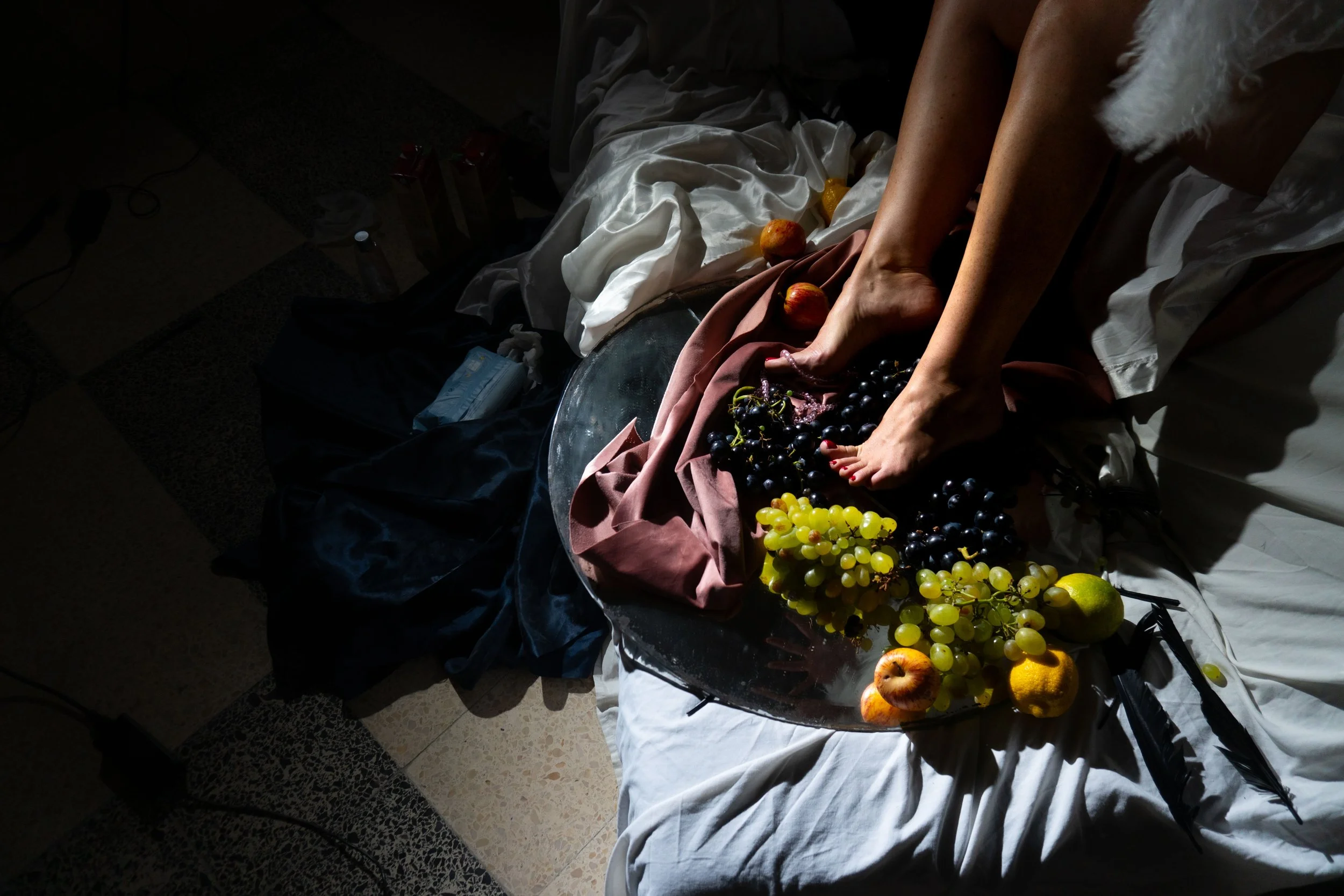
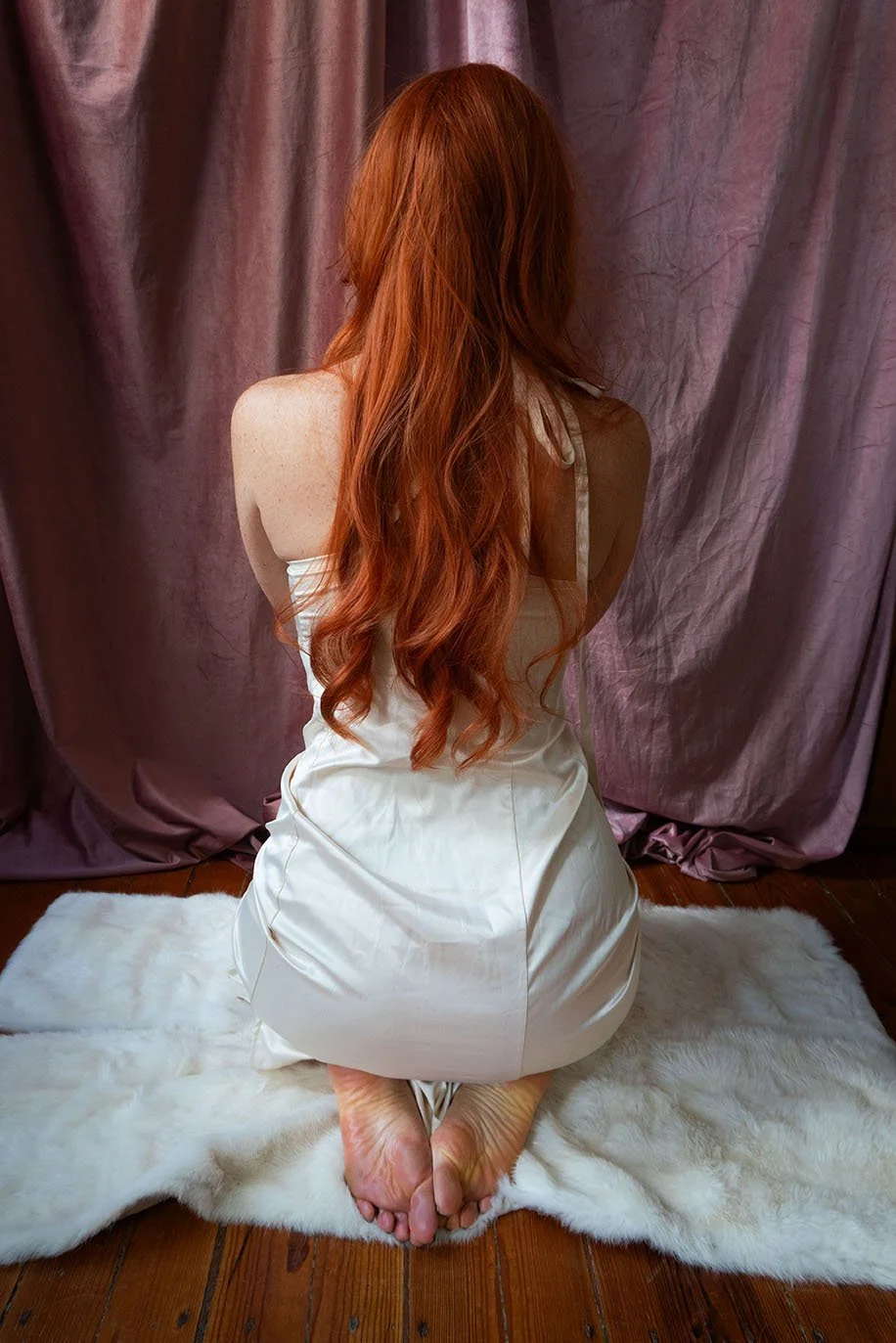
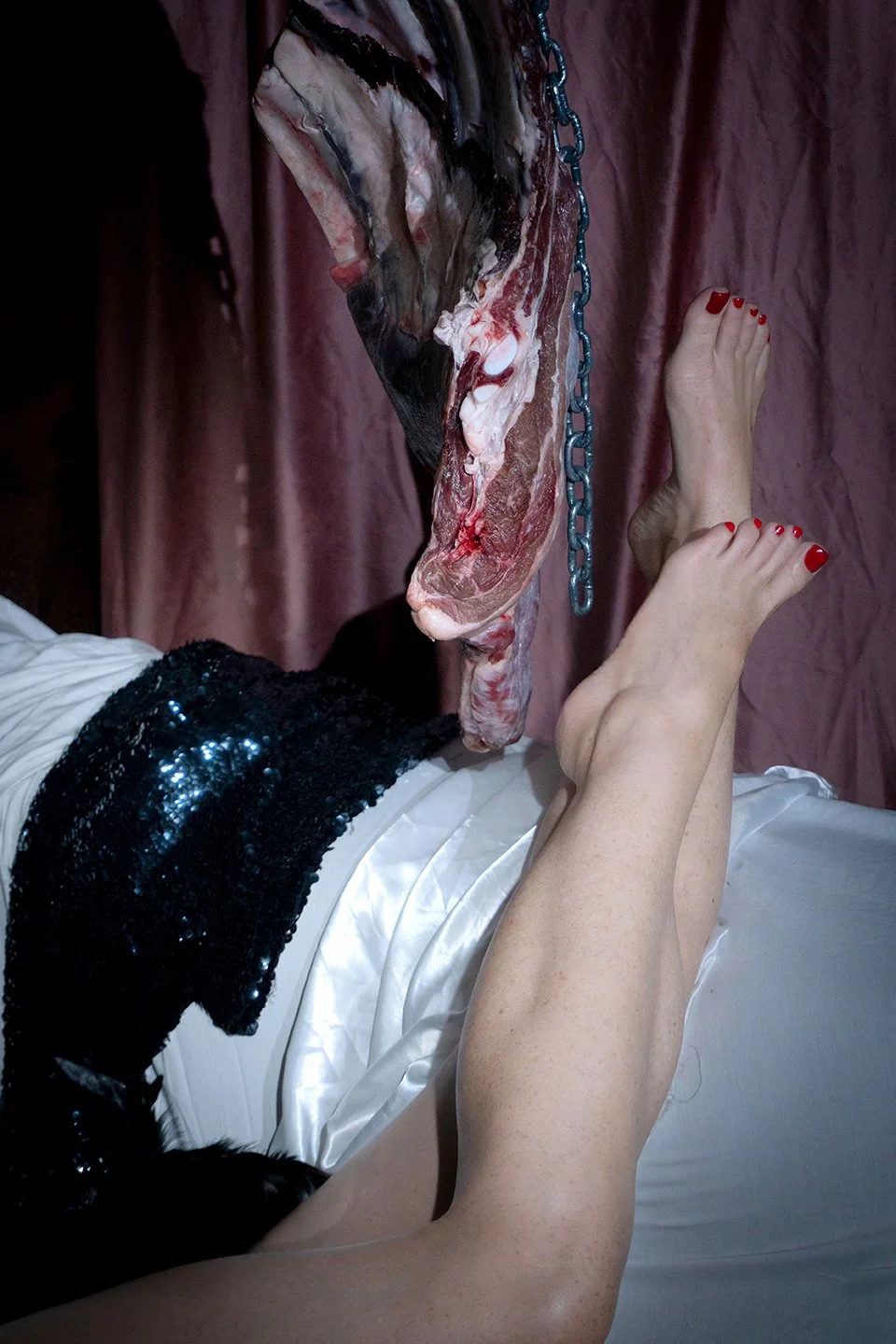
At the centre of Divine Commodity is the artist’s alter ego, Lola, a carefully constructed digital persona who shares foot-focused content on OnlyFans. Lola merges art-historical imagery and symbolism with contemporary internet aesthetics. Her identity draws from Christian iconography, in which feet represent divinity and religious devotion, while simultaneously evoking contemporary associations with the digital gig economy and freelance sex work on adult content platforms. While the content is not inherently explicit, its placement on OnlyFans frames it within a stigmatised adult context, underscoring how societal perceptions of value shift according to platform and cultural framing.
As both a conceptual artwork and cultural experiment, Divine Commodity actively participates in and critiques overlapping cultural and economic ecosystems. By integrating fine art practices into a commercial digital platform, it challenges preconceived notions of artistic legitimacy and questions where and how art is expected to exist within a commodified digital world.

Methodology
-
The methodology developed for Divine Commodity was experiential and performative in nature, with knowledge generated through participation and embodiment in which the research environment became an active part of the process, allowing questions to be explored through direct experience.
Unexpected encounters and difficulties became catalysts for further enquiry. Challenges with foot choreography for example led to an investigation of embodiment and movement, while the increasingly complex relationship between myself and Lola prompted reflection on performance, identity and authorship.
The methodology therefore remained open and responsive. Experience generated new questions, which in turn altered the direction of the practice. Weekly video diaries supported this reflexive process, providing an ongoing record of observations, experiences and shifts in thinking.
-
The construction of a persona was fundamental to the methodology of Divine Commodity. Lola provided a means of entering and participating in an algorithmic environment that would otherwise have been inaccessible to me as the artist. Working through a fictional identity allowed access to a distinct platform ecology shaped by different visibility structures, audiences, economies and behavioural expectations. This enabled me to experience aspects of platform culture and online sex work from within, including questions of intimacy, exploitation, online safety and algorithmic visibility, while encountering visual, cultural and generational influences beyond the logic of my own online presence.
The methodology therefore involved both constructing and inhabiting the persona. The distinction between Lola and myself created a degree of distance that made participation in questions of sexuality, intimacy, emotional labour and self-exposure possible, while inhabiting her continually tested the limits of that separation. Lola was also digitally inhabited by different members of the team while remaining recognisably the same individual. This provided an opportunity to examine the relationship between the apparent singularity of an online persona and the collective processes through which such identities can actually be produced and maintained.
Lola functioned simultaneously as a means of accessing the research environment, an artistic construction and a site through which questions of identity, authorship, intimacy and self-commodification could be experienced and examined.
-
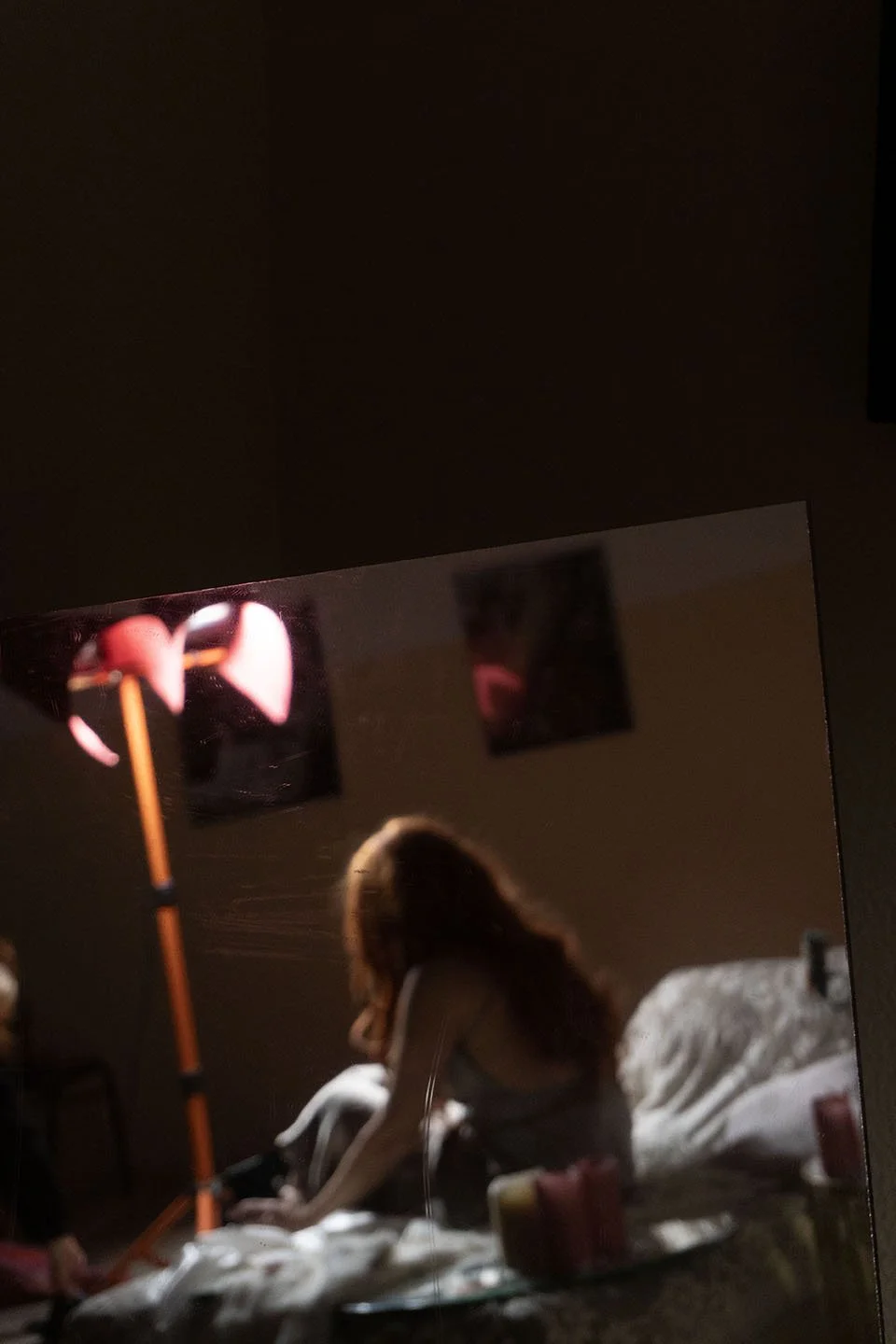
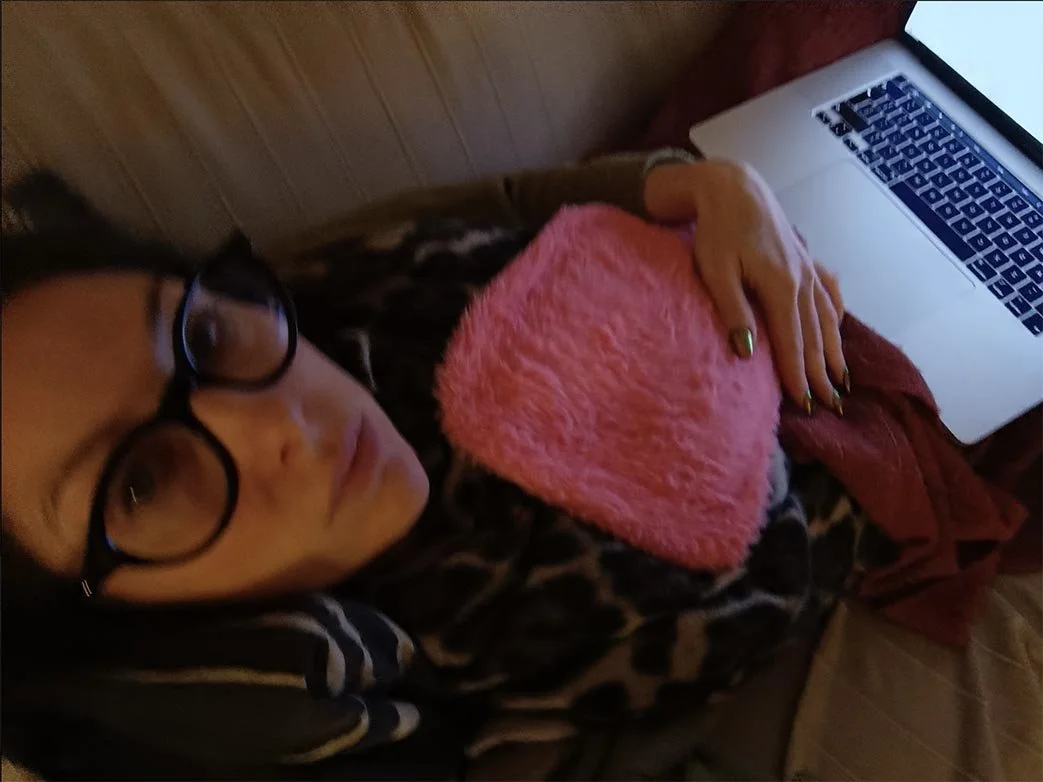
Artistic production of Divine Commodity developed through a combination of visual research, performance, image-making, video production and writing. The weekly video diaries developed their own performative ritual. Recorded in a dedicated velvet-curtained studio space, usually on Sundays.
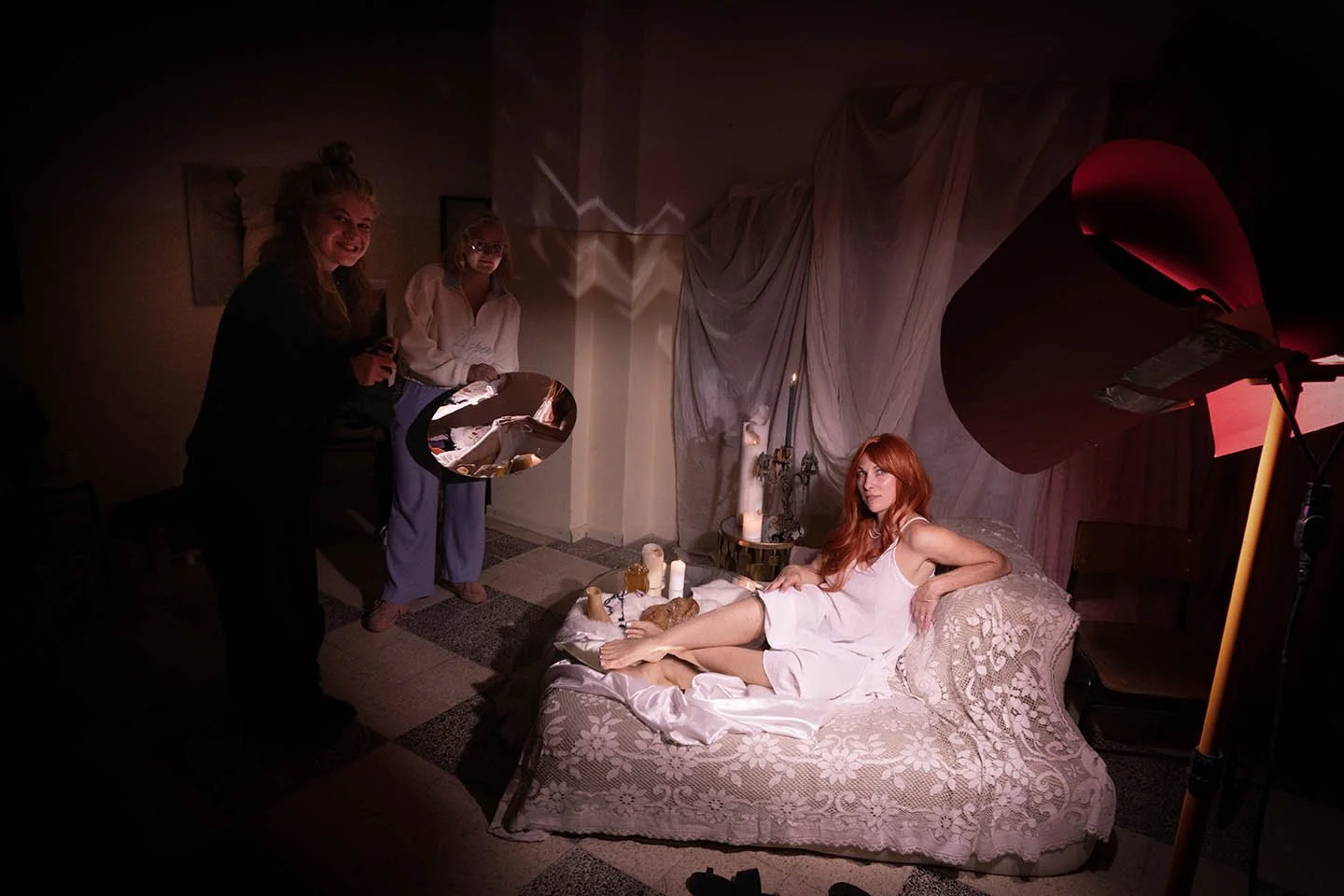
Photography and video formed the central modes of image-making. Monthly shoots were organised around thematic groups derived from art-historical and Christian references. Photographic and moving-image materials were then developed simultaneously. Bodily preparation became part of the artistic methodology. Nail colour, design, skin and foot condition were carefully considered, with decisions contributing to the symbolic construction of the character while also demonstrating the extent to which the body itself had become a material requiring preparation and maintenance for the image.
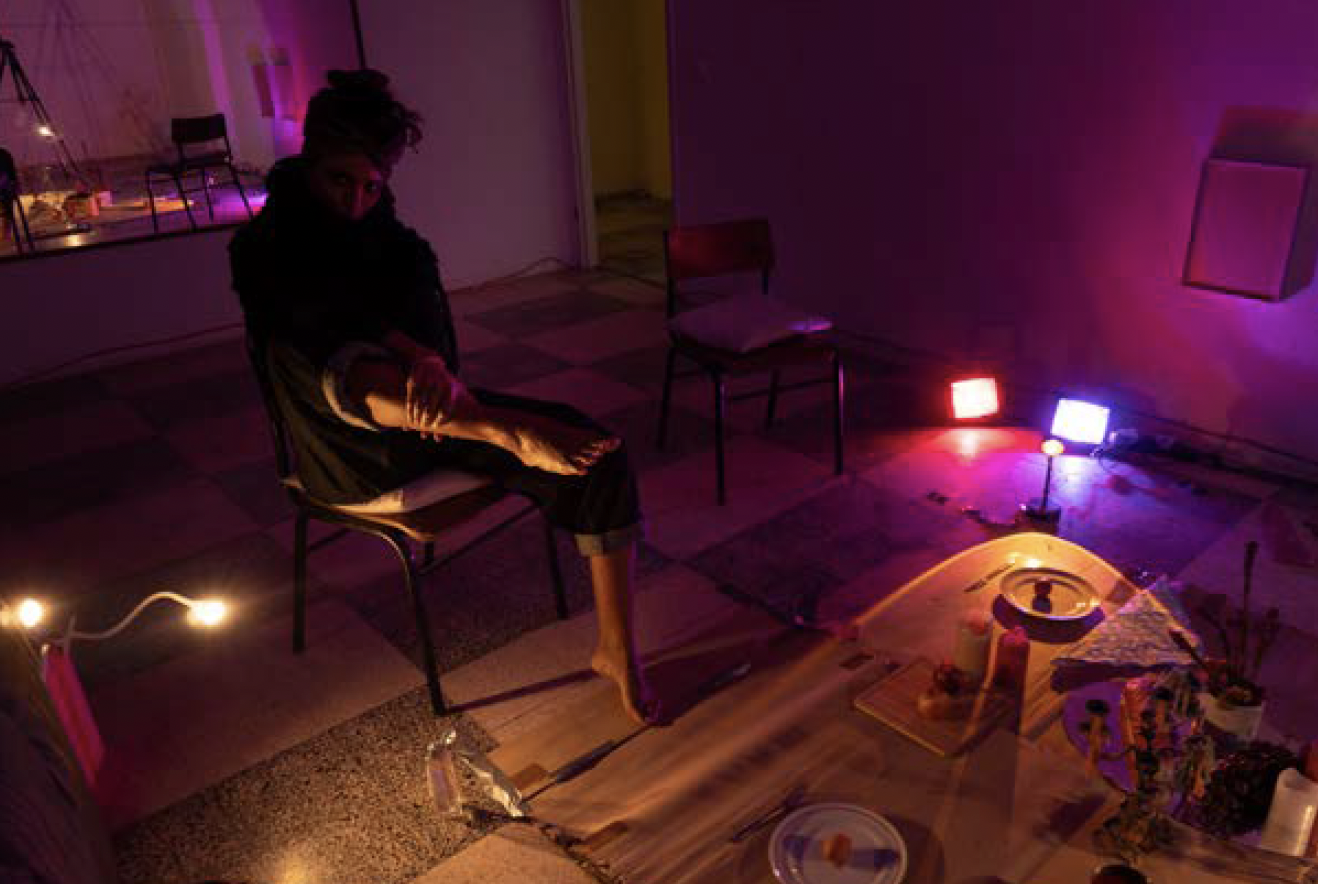
Embodiment became a further area of experimentation through collaboration with choreographer and interdisciplinary artist Nithya Iyer. Movement exercises and rehearsals explored how the feet could communicate character, emotion and narrative.
Performance also continued between shoots through Lola's online presence. Writing became an artistic practice in itself, encompassing captions and hooks for Instagram and TikTok, Lola's weekly Sunday sermons, and direct correspondence with subscribers. These interactions required Lola's personality, tone and relationships to be continually produced and maintained.
Across these processes, artistic production became a continual negotiation between intention and circumstance. The original visual and conceptual framework provided a starting point, but embodiment, location, material conditions, platform requirements and the scale of production repeatedly altered how the work could be made.
-
OnlyFans, Instagram and TikTok functioned as interconnected but distinct research environments, each with different audiences, conventions, visibility structures and economic models. Working across all three allowed the project to observe how the same persona and material changed as it moved between different digital contexts.
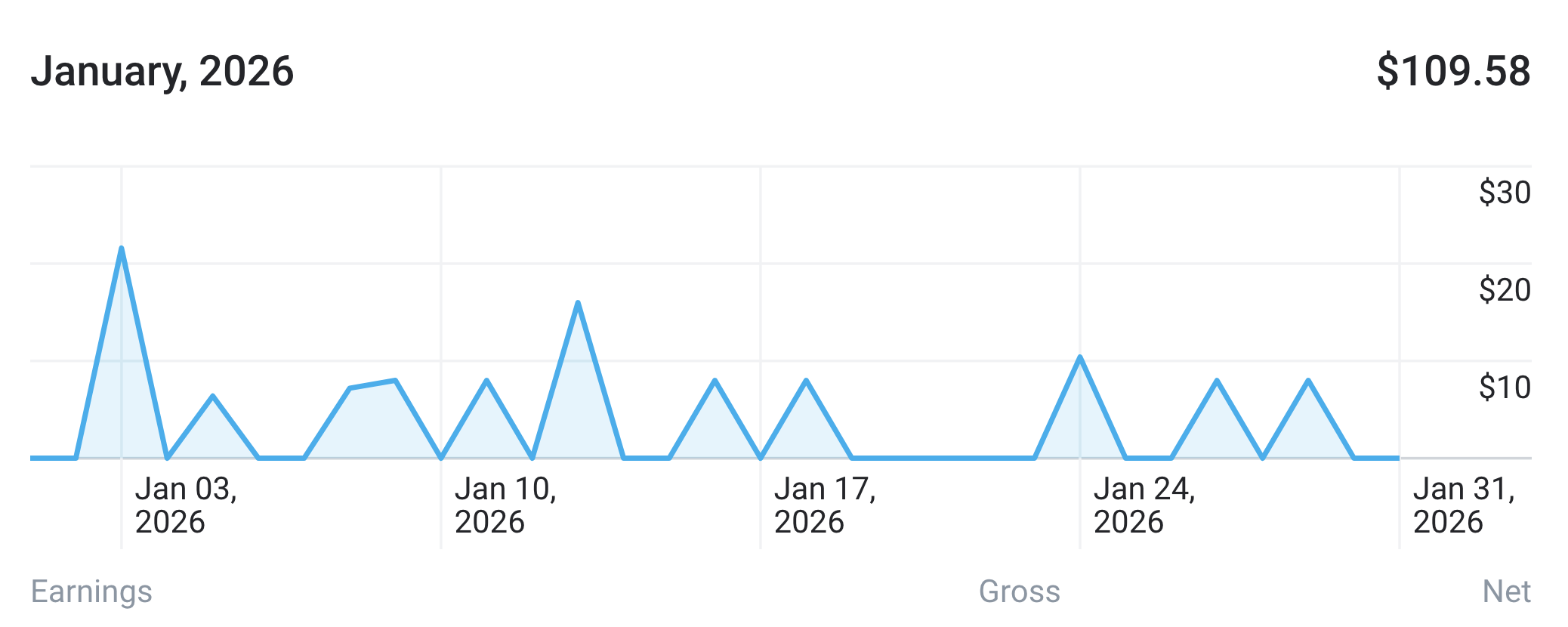
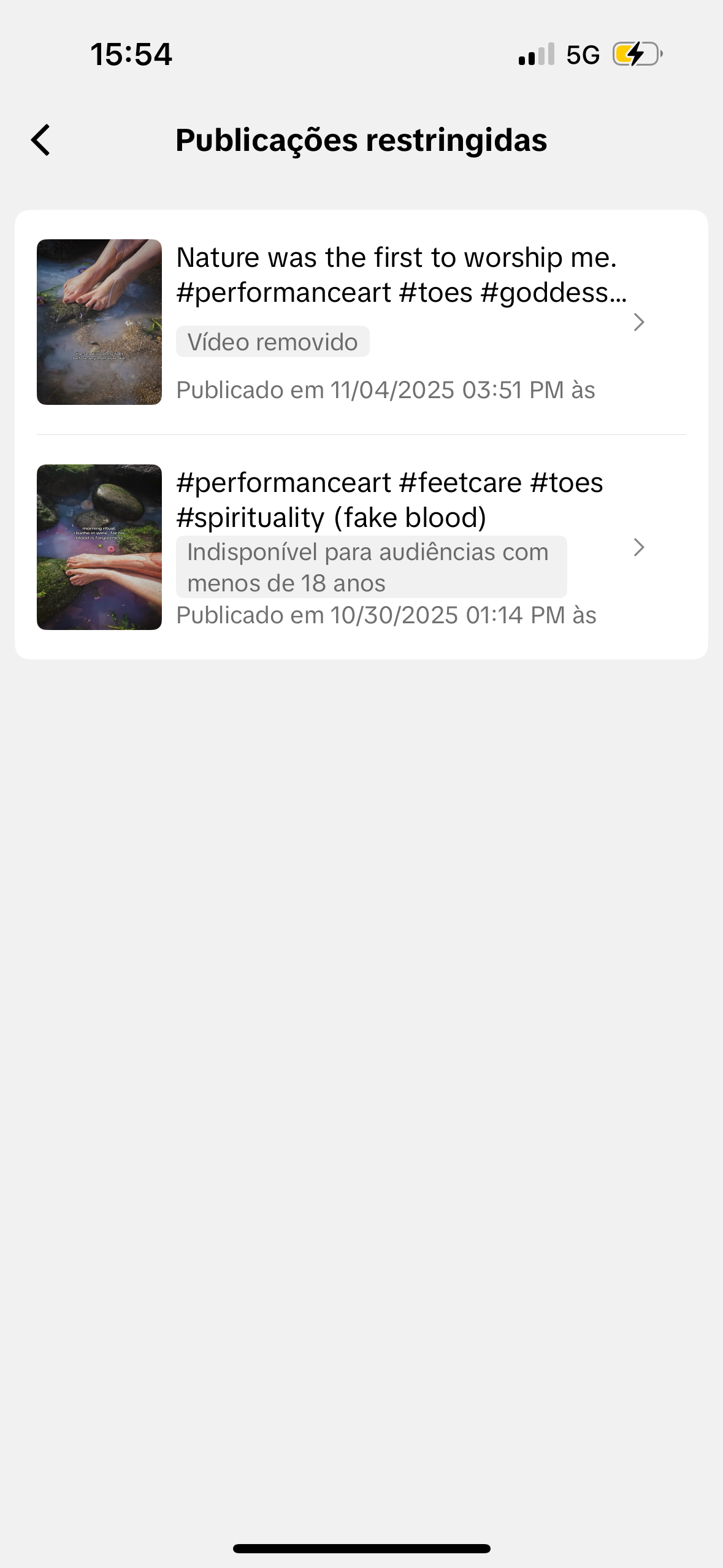
The research involved continual observation, participation and adaptation. Differences in platform policies, moderation, algorithms and audience behaviour required platform-specific approaches to content, communication and promotion. Analytics provided measurable feedback on engagement and reach, while less transparent systems of moderation and visibility required ongoing trial and error.
These conditions demonstrated that platforms do not simply provide spaces for distributing work; they actively shape what can be produced, how it is communicated, what becomes visible and, ultimately, what can become economically viable. Platform-based research therefore became a way of examining how digital environments influence artistic production, audience engagement and the value attributed to images and personas.
-
Collaboration became increasingly central to the methodology of the project. The collaborators were not originally conceived as co-researchers, but were brought in at different stages as the needs of the project expanded and new forms of expertise became necessary developing an expanding network of artistic, technical and critical knowledge. The increasing scale of production also required additional practical support, making the day-to-day operation of the project materially sustainable.
As the research developed, new areas of enquiry emerged that had not been anticipated at the outset, including algorithmic bias, AI-mediated communication, the formation of emotional attachment with online personas, and the digital and psychological labour involved in inhabiting an evolving fictional persona. These developments required further assistance and specialist knowledge, with conversations and collaborations opening new paths of enquiry.
By the end of the research period, Divine Commodity had therefore become increasingly collaborative and interdisciplinary, not simply because the workload required it, but because the research itself demonstrated the limitations of approaching these systems from a singular perspective. This also became significant to the project's understanding of online personas: what appears to be an individual performer or creator can in practice be the product of multiple people, forms of expertise and distributed labour. Collaboration thus became both a practical condition of the project and a finding within the research itself.
LOLA
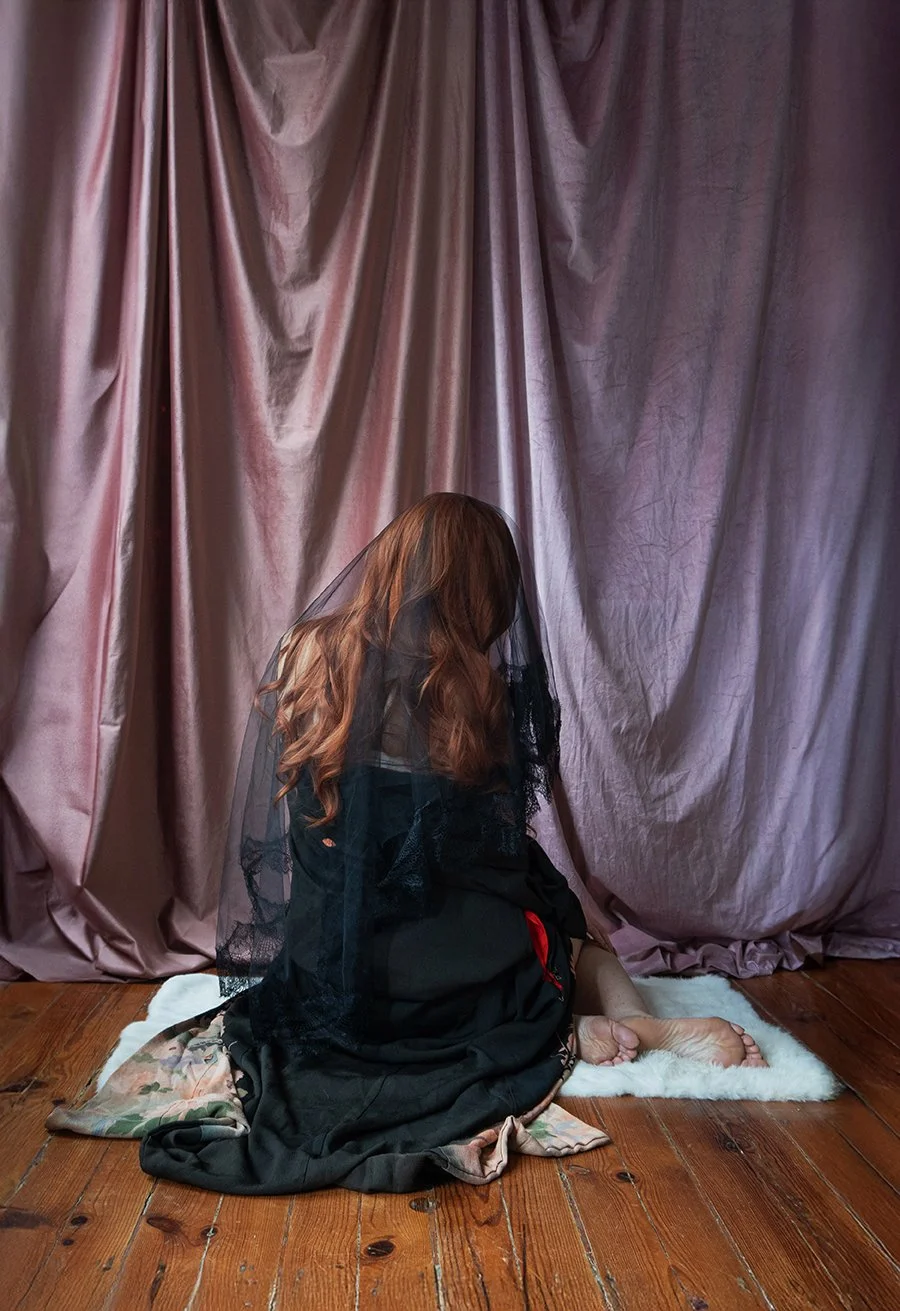
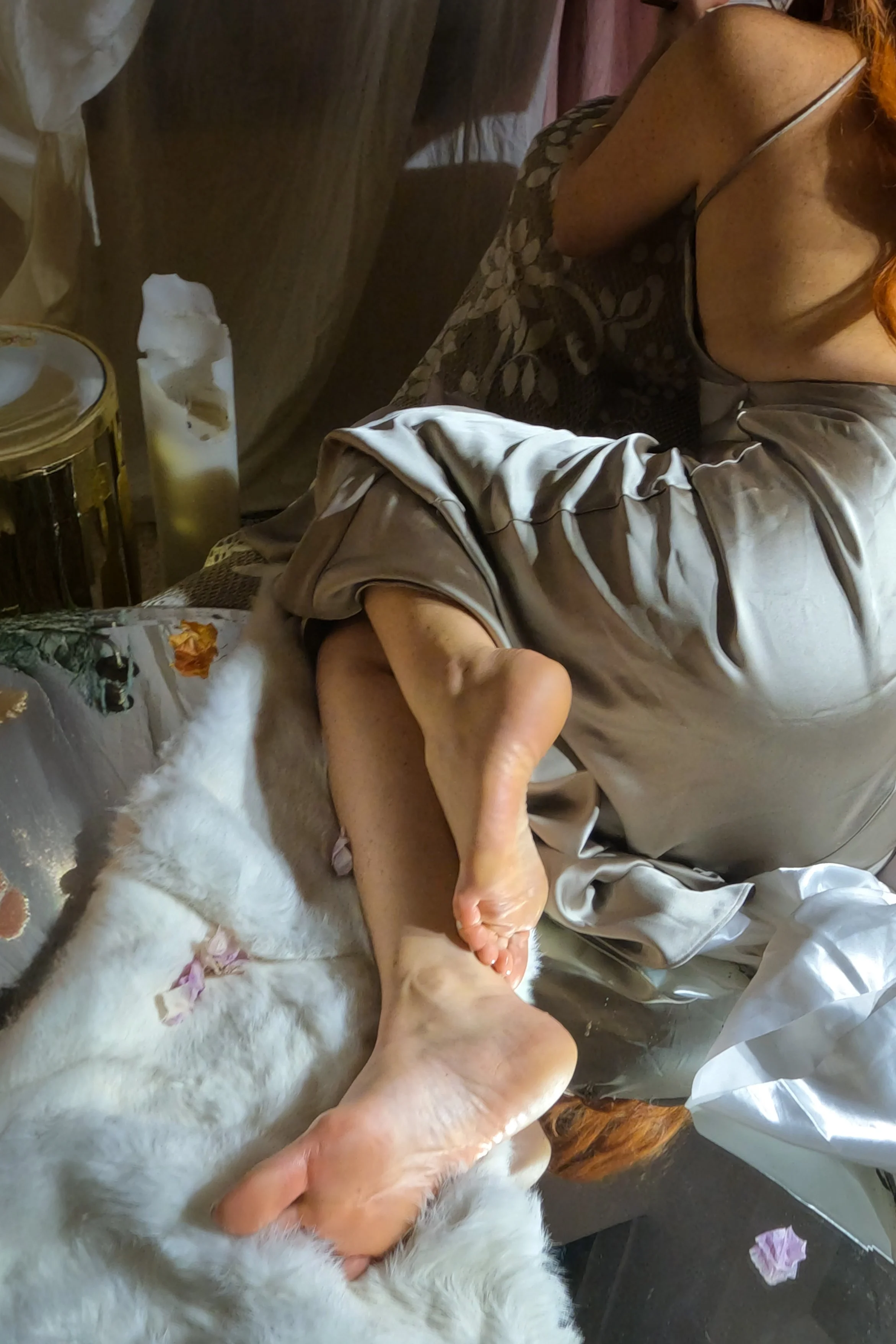
Lola was initially conceived as an alter ego who would only show her feet: a device through which to investigate the culture of online self-commodification from within, allowing these spaces to be entered without presenting the activity as an art project. As the project developed, however, she evolved into something closer to a heteronym; a distinct character with her own history, personality, voice and internal logic.
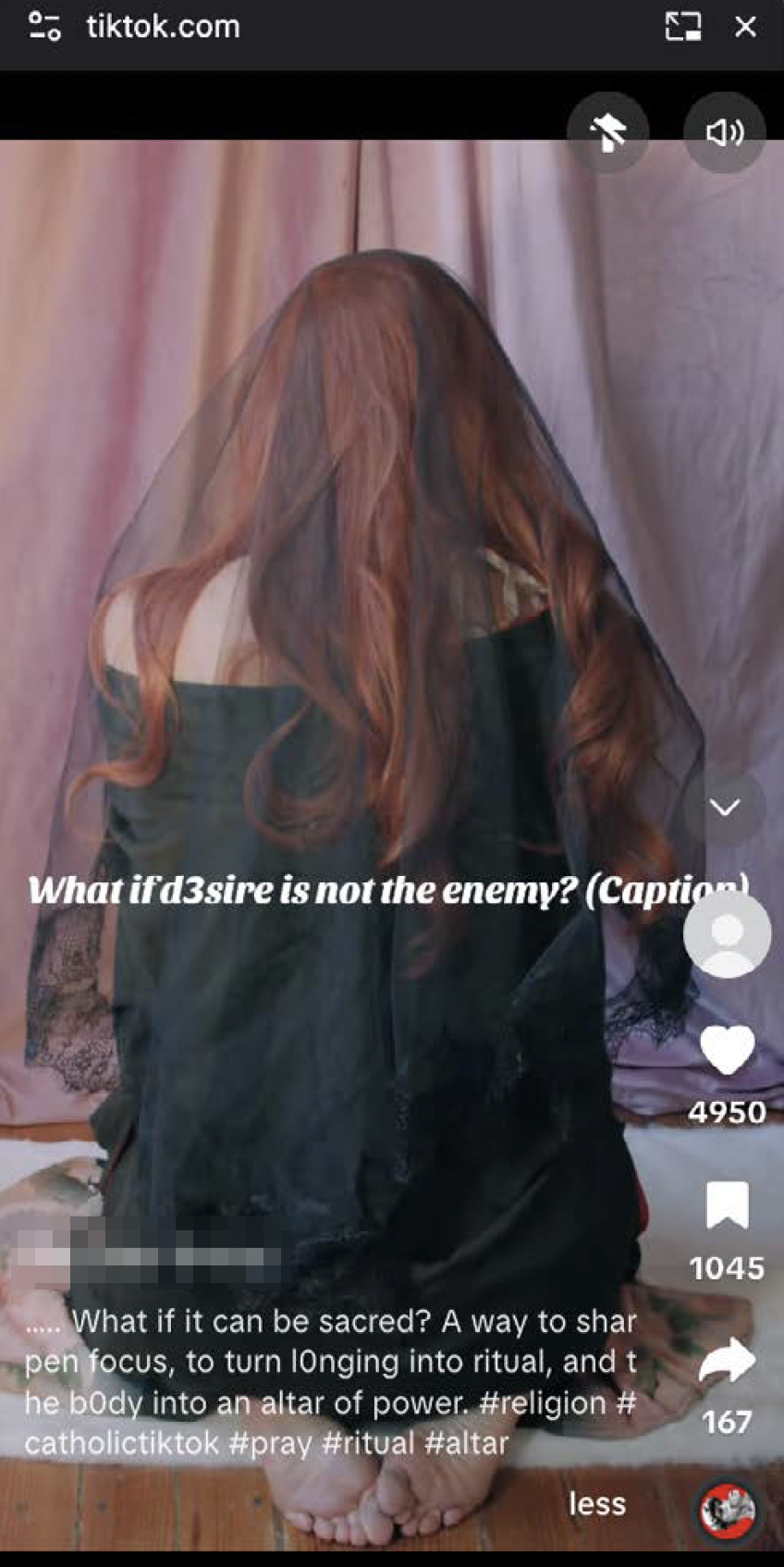
For Lola to function convincingly within the online environment, she needed to become more than a disembodied image of her feet. She developed into a whole-body presence, marked by her long red hair, which allowed her face to remain concealed throughout. Her biography, behavioural logic, visual language and modes of communication developed alongside this physical expansion, combining art-historical and devotional references with internet and fetish aesthetics. AI became an unexpected part of this process, initially supporting the production of captions and later helping to maintain Lola’s voice, tone and behavioural logic across hundreds of interactions. This allowed different members of the project to digitally inhabit Lola while maintaining a recognisable character.
As Lola’s internal logic accumulated, she could be questioned about her opinions and actions, generating responses that were not always anticipated. Through photography, video, performance and movement, her identity also became embodied, developing from an image of a foot model into a fully formed and increasingly autonomous presence.
Through this evolution, Lola became both the subject and methodology of the project, raising questions around authorship, identity, intimacy and the boundary between a fictional persona and the person who creates and inhabits her.
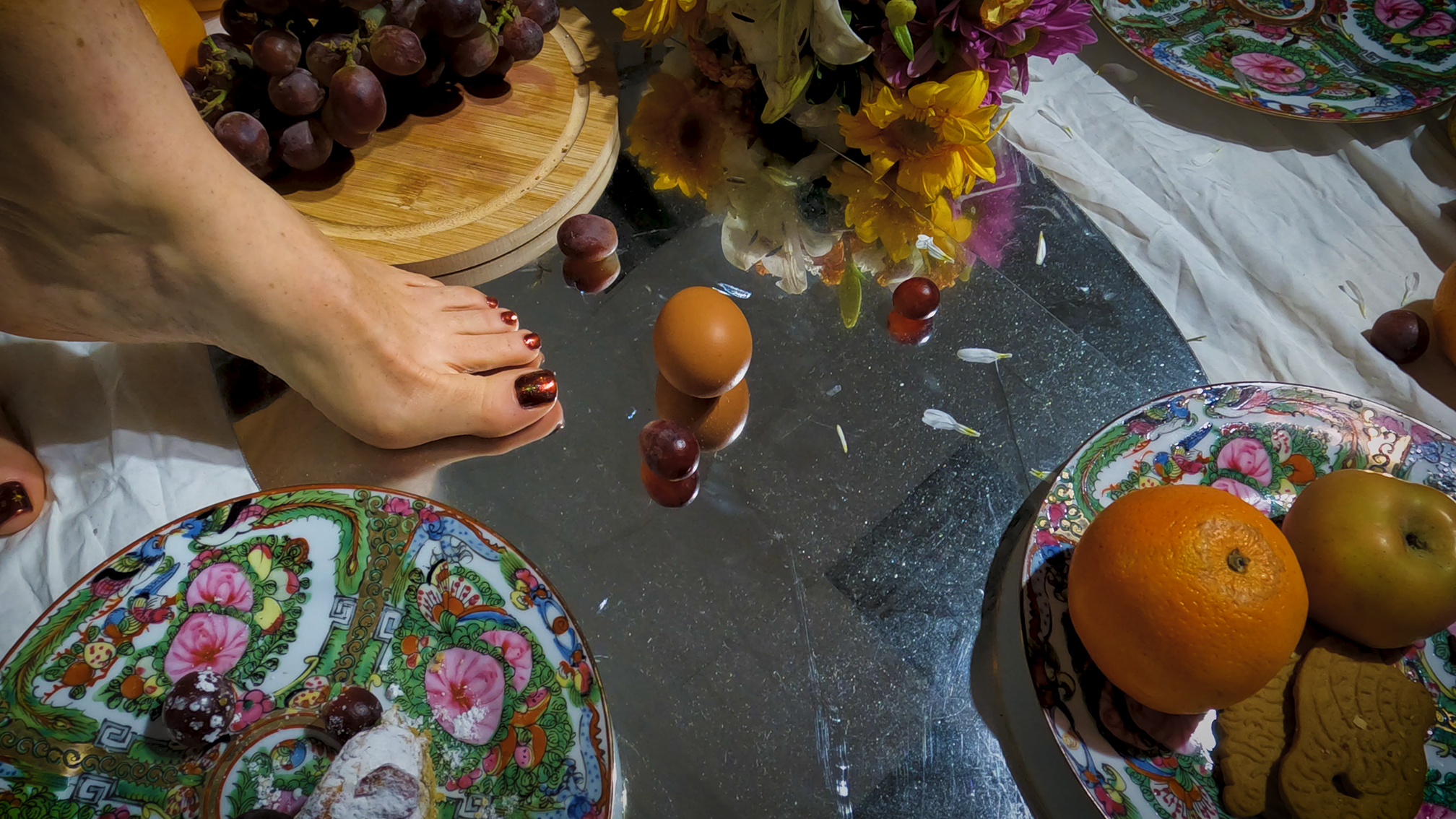
experiments with movement /short form video
DOLORES
weekly video diaries
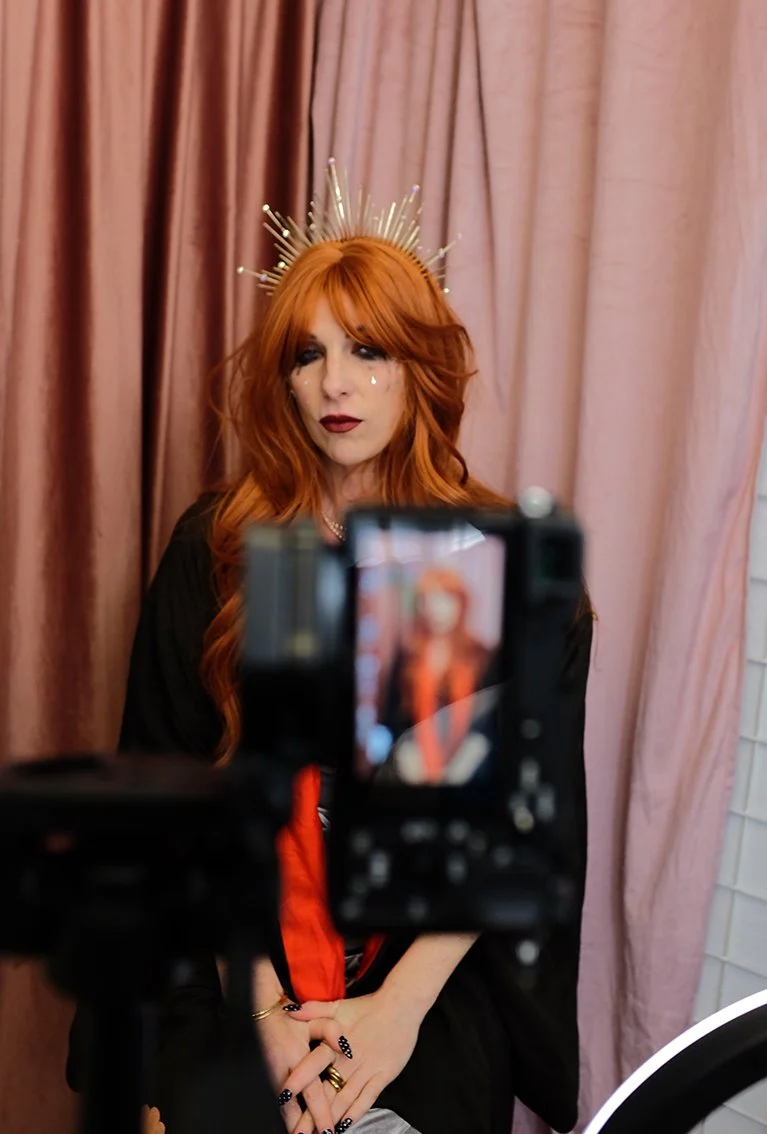
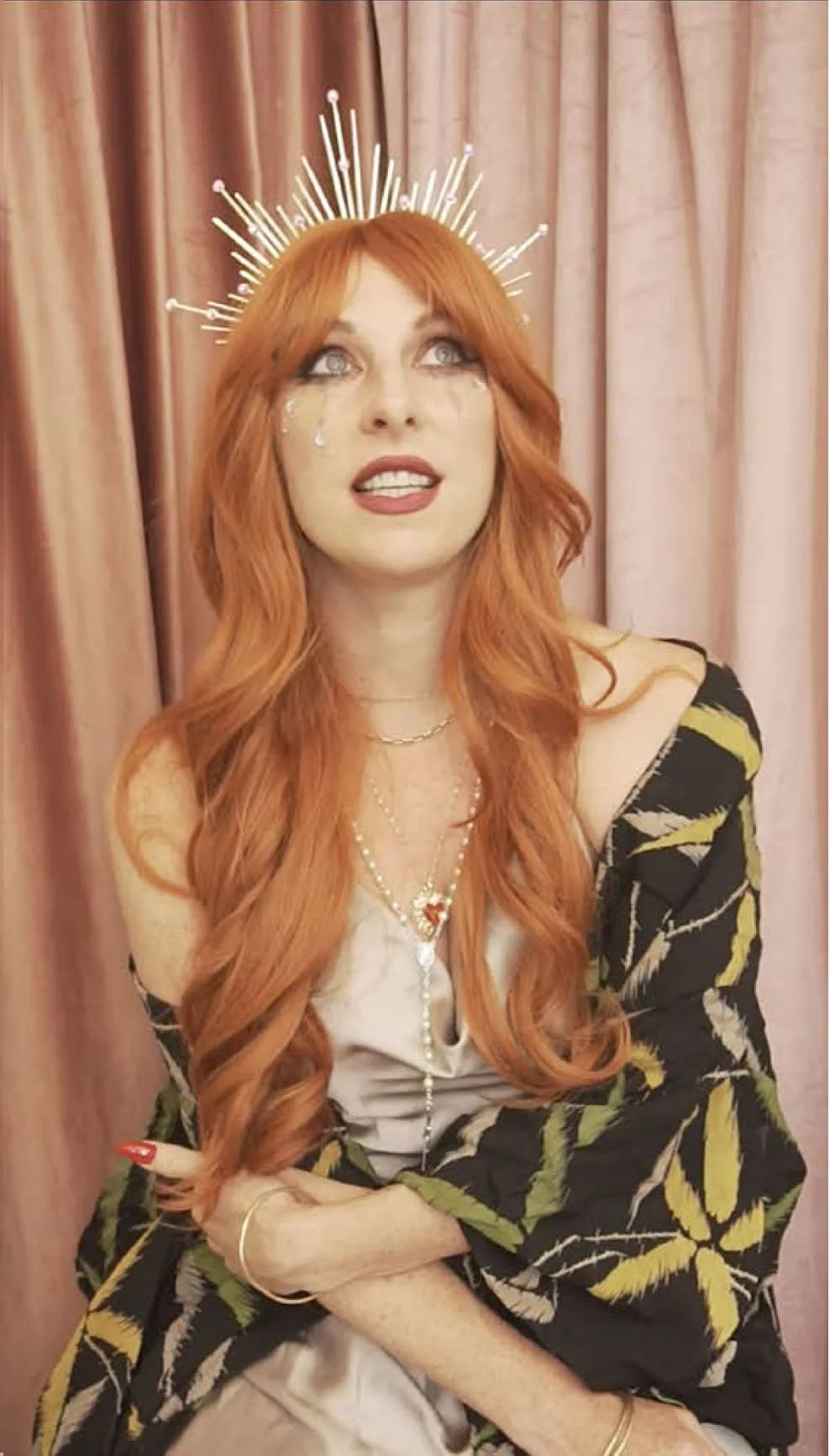
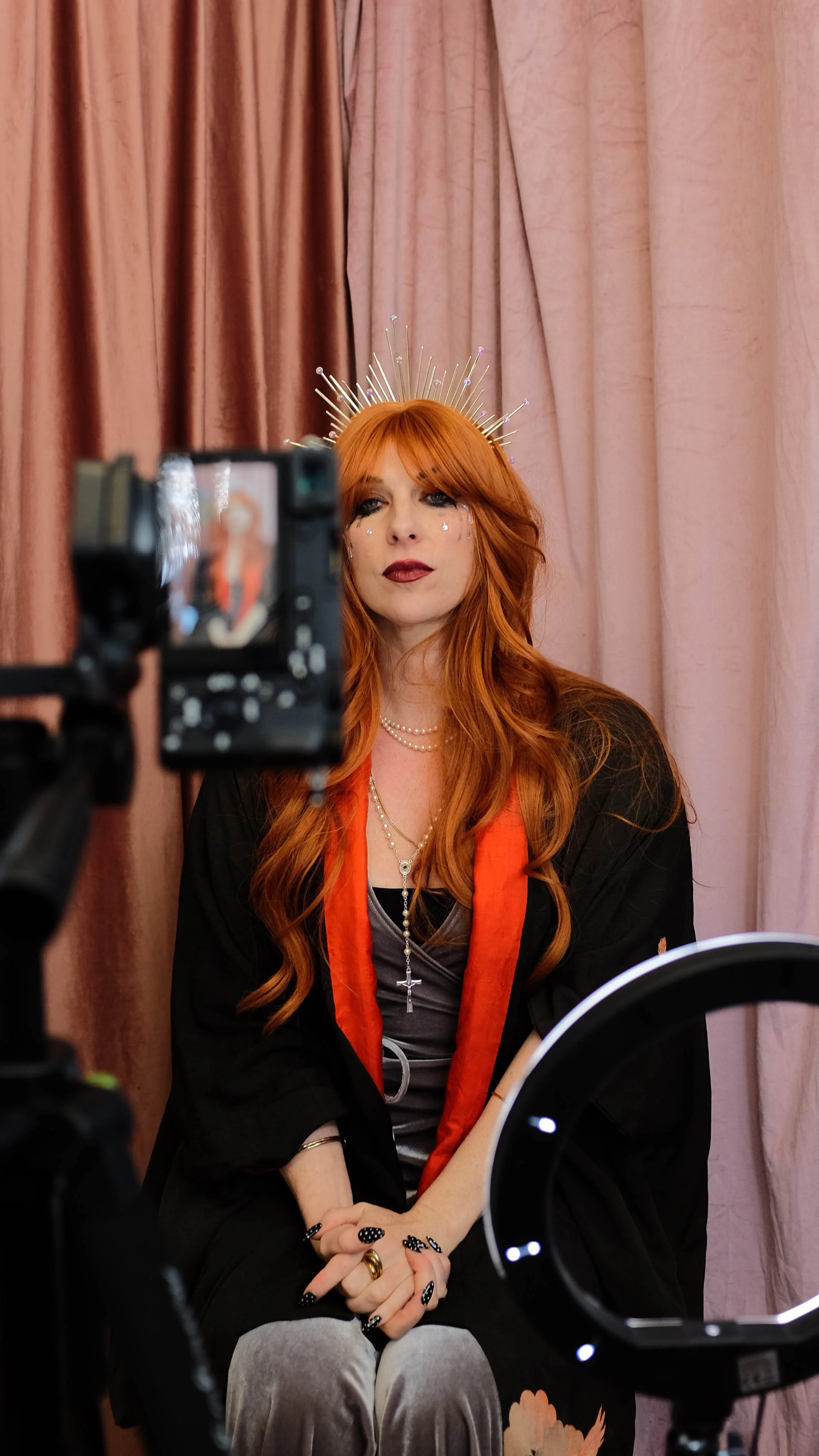
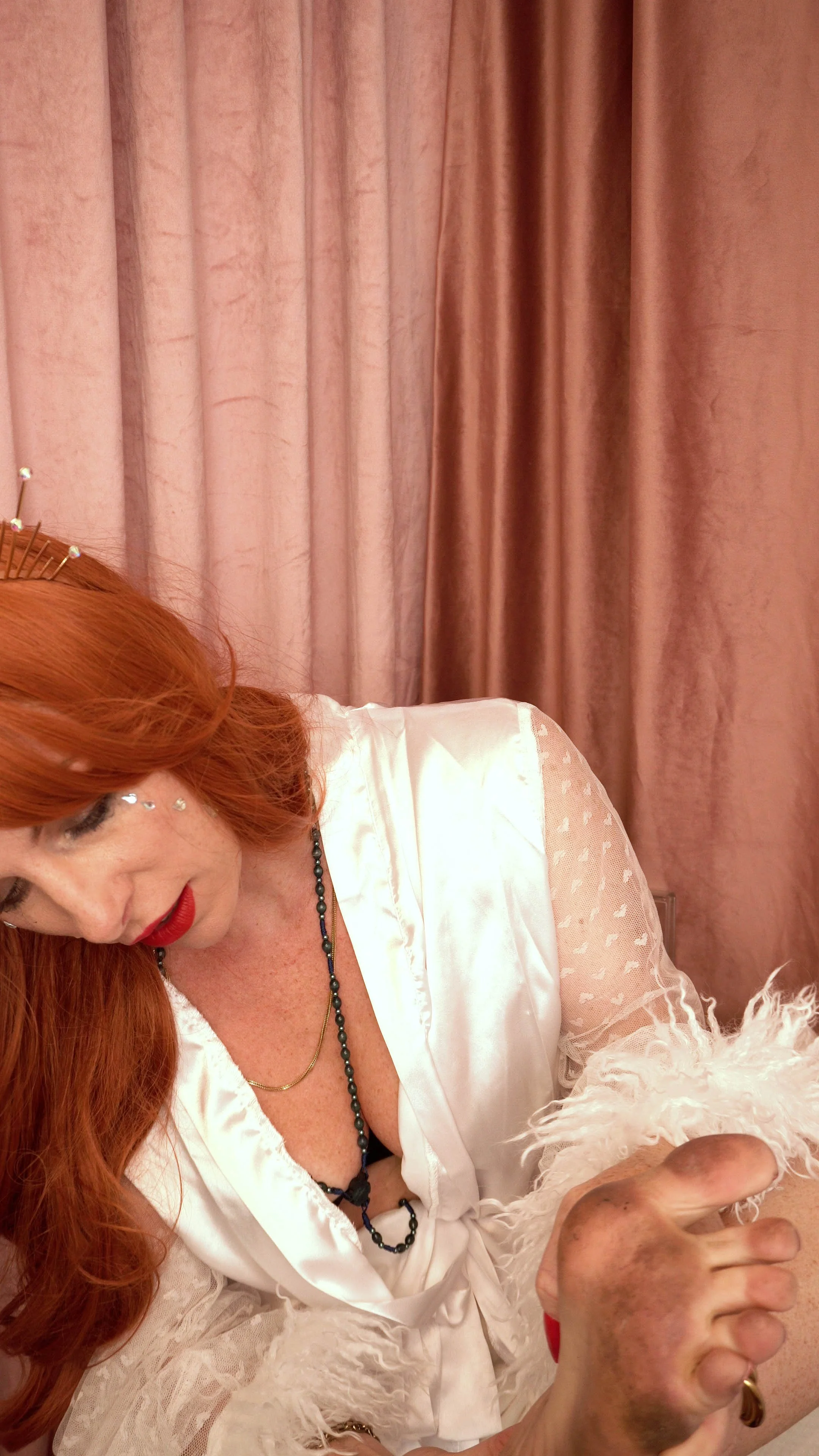
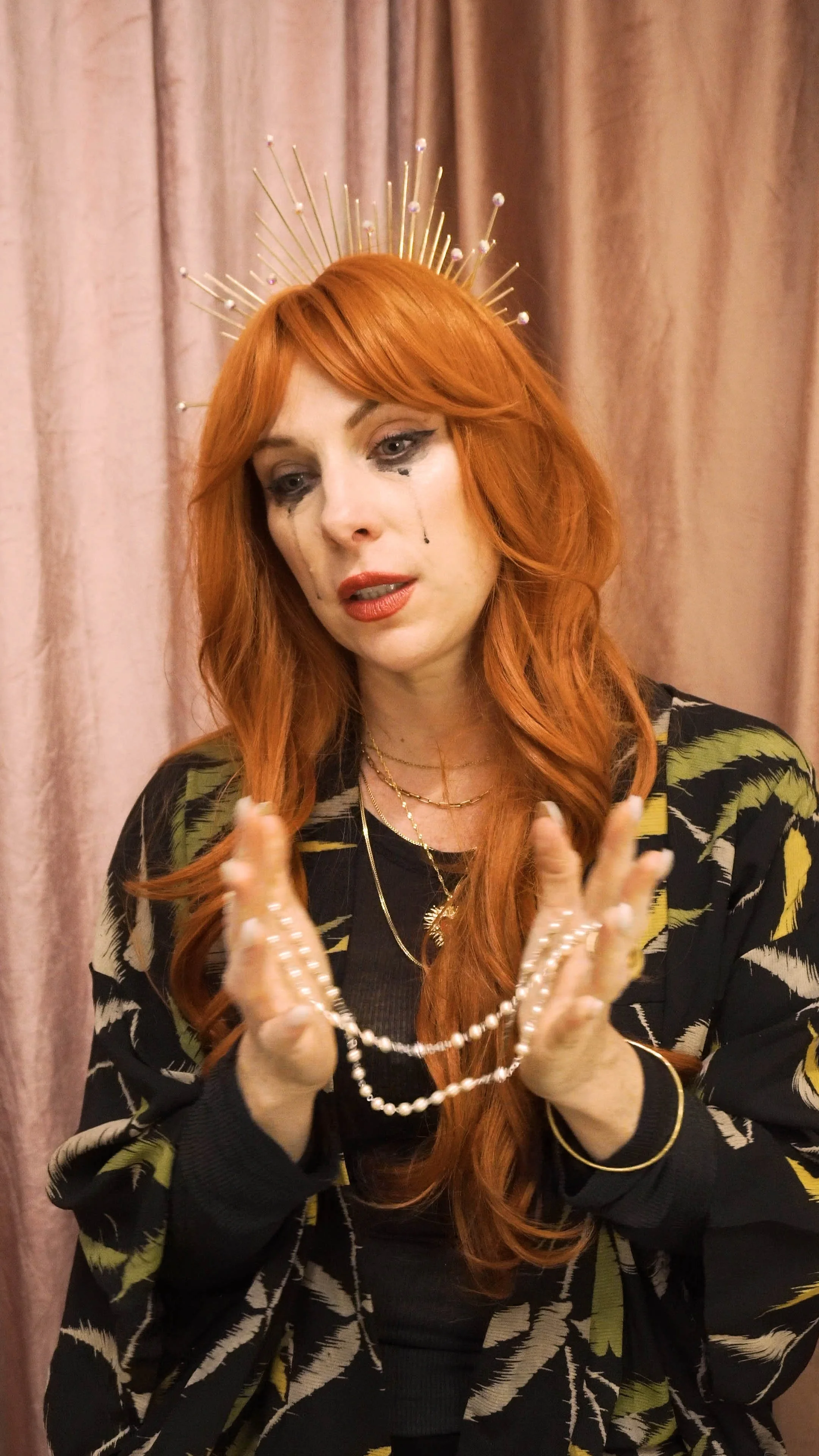
The weekly video diaries were initially conceived simply as a non-pubic facing way of documenting observations and experiences. Recorded “in costume”, they offered a playful and self-referential counterpoint to Lola, drawing on contemporary internet aesthetics through rhinestone tears, a halo-like headpiece and direct address to camera. At this stage, Lola remained a foot focused character device, and the diary figure was visually distinct from her cropped imagery and concealed face.
As Lola developed into a more fully formed character with the same wig however, the diaries began to blur the distinction between Lola and the artist. Rather than separating the two, this confusion was retained as a reflection of the increasingly porous boundary between artist and persona.
The diary figure became Dolores: a third character, aware of Lola’s construction and of the references and decisions that shaped her, including the transformation of Dolores into Lola and the project’s references to Mater Dolorosa. Dolores therefore occupied a position between artist and character, simultaneously experiencing the research and acknowledging the fiction through which it was mediated.
The video diaries became a further site for exploring the boundaries between artist, persona and performance. Even the voice became part of this construction when footage was accelerated during editing, transforming it into something unfamiliar. Rather than correcting it, the altered voice was retained, adding another layer of distance between myself as the artist and the figure speaking.
Platform Content and Communication
The project extended beyond the production of photographs and videos into continuous platform-specific content and communication. Posts, captions, hooks, Lola’s Sunday sermons and direct correspondence with subscribers became part of the ongoing performance of the character.

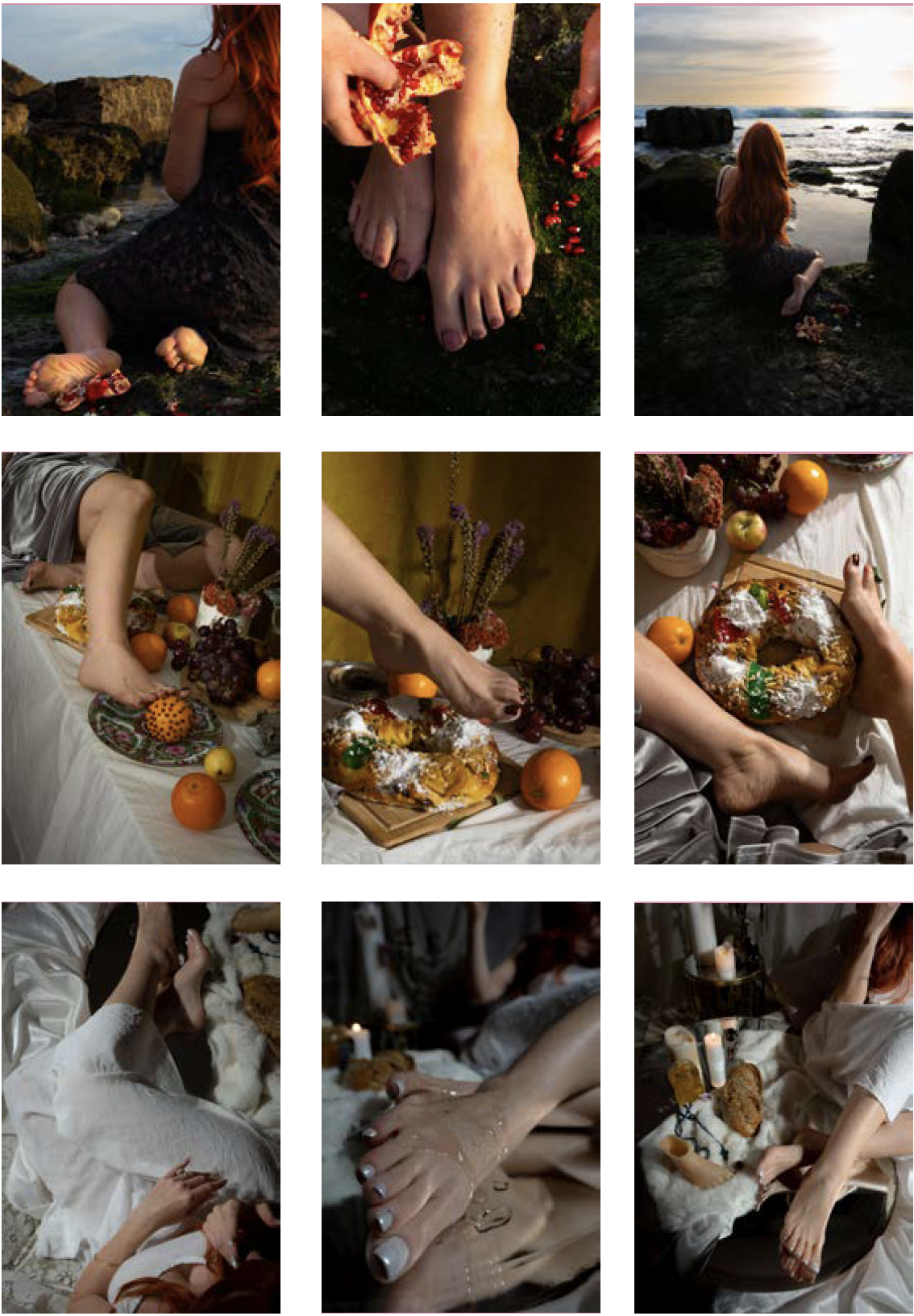
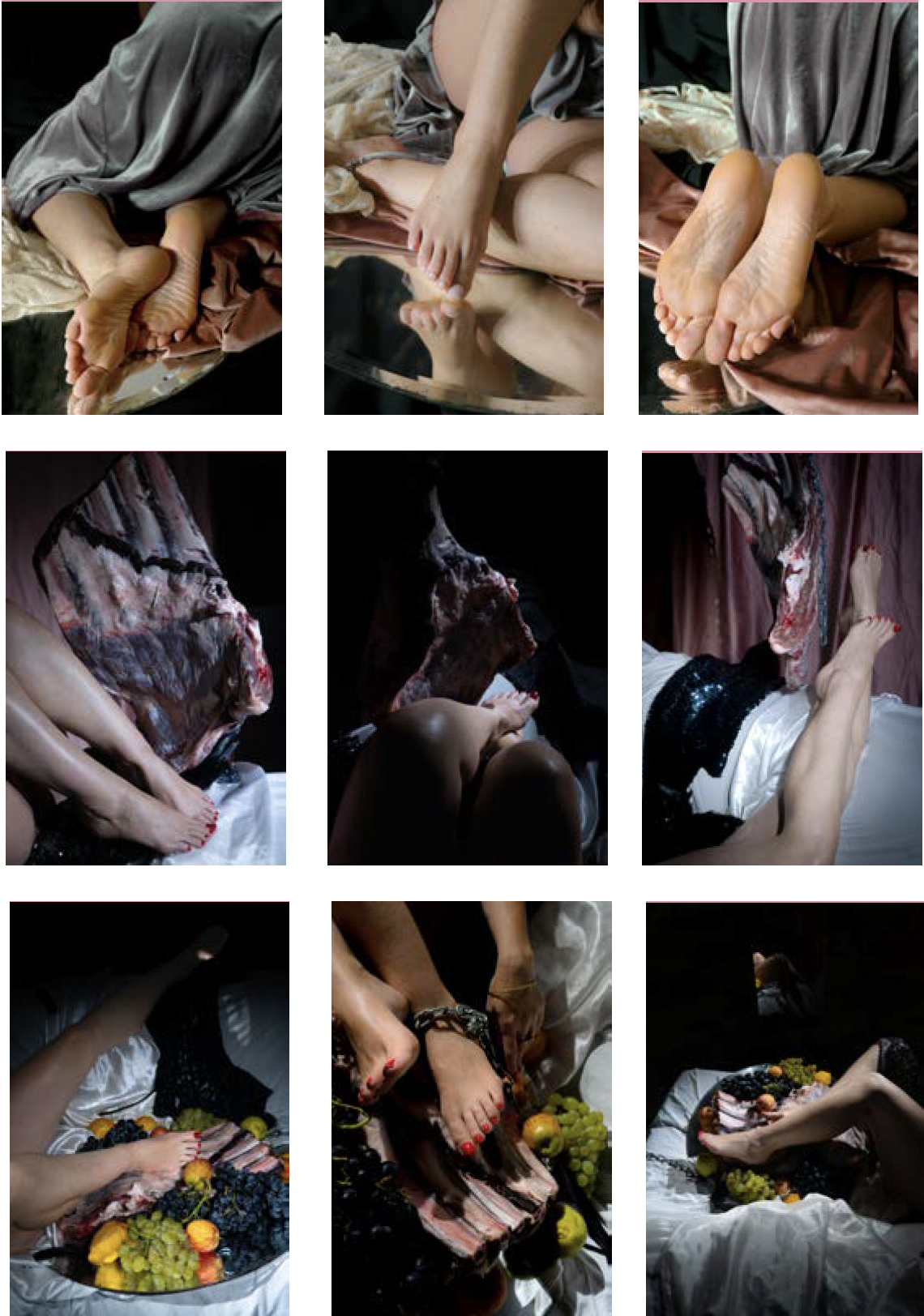
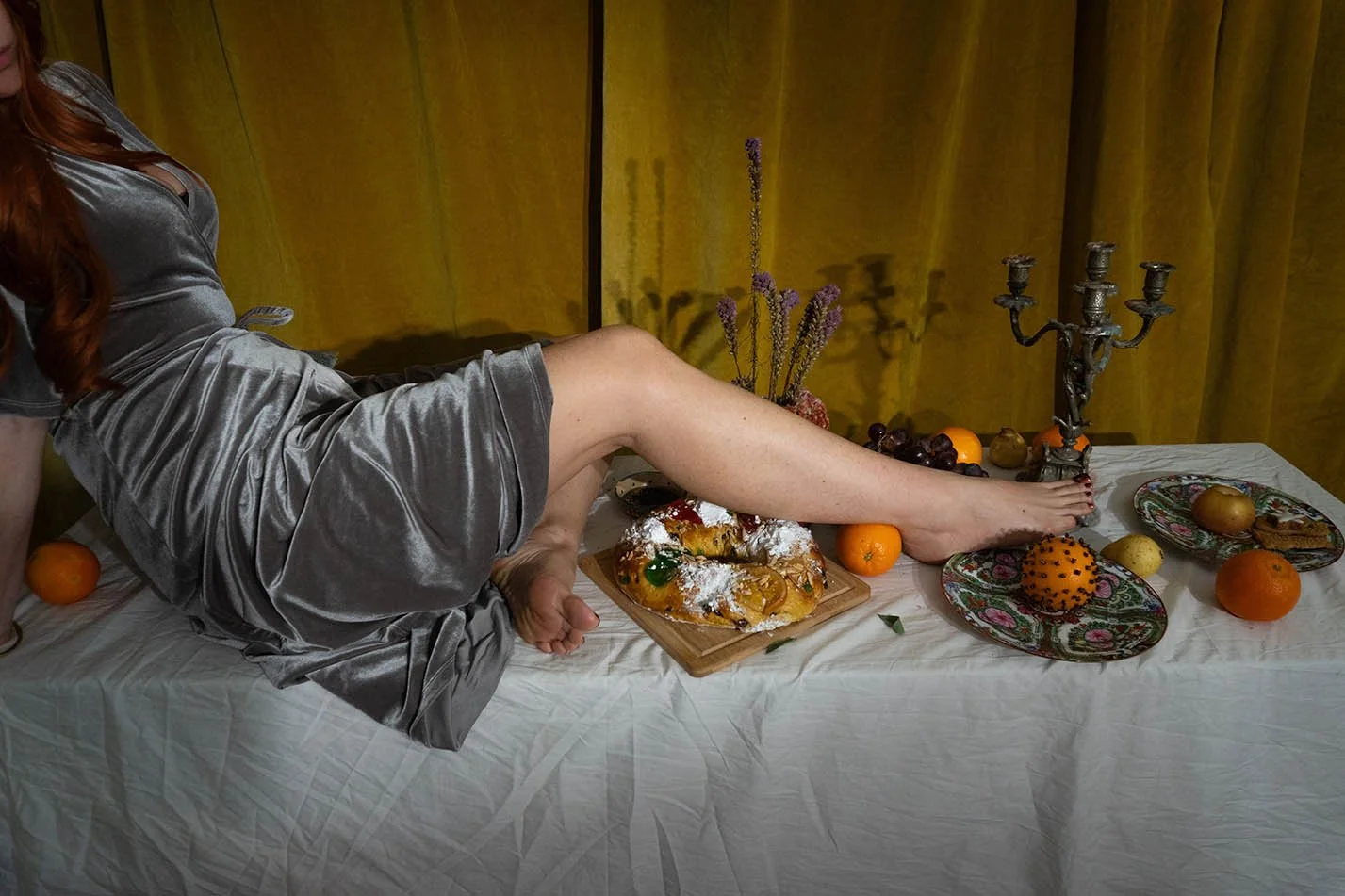
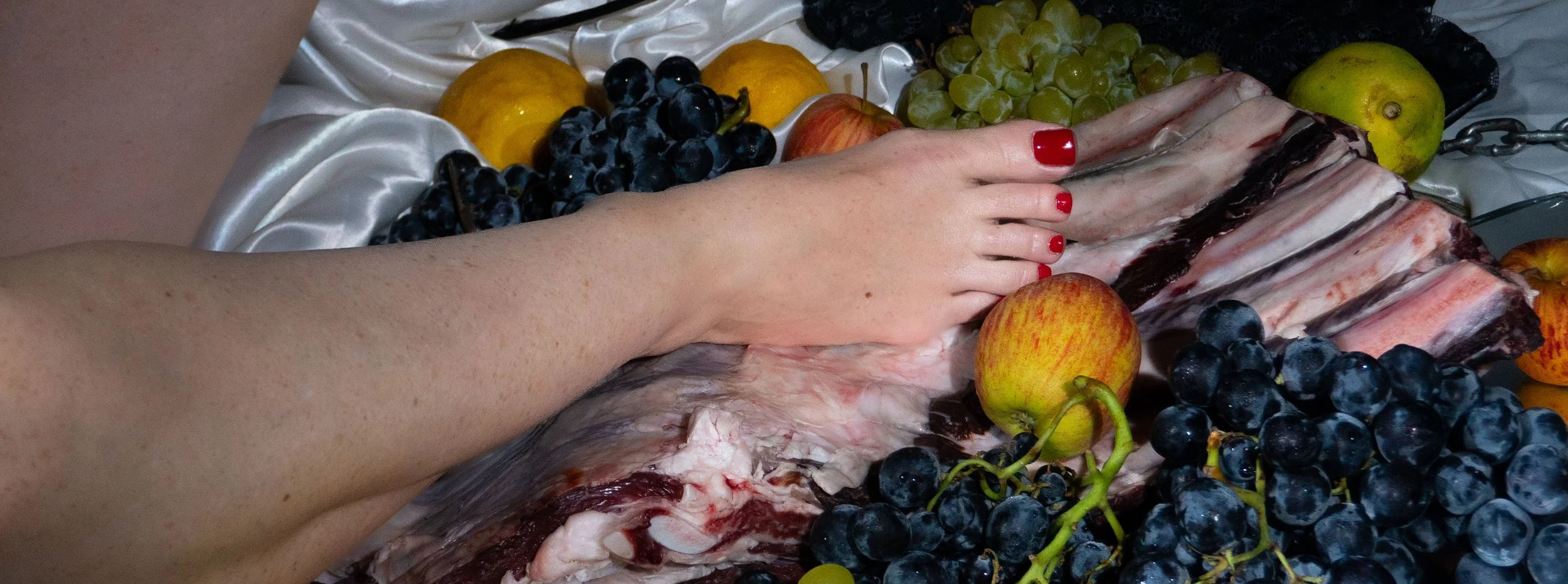
Photoshoots and Image Sets |
Over 6 months Studio shoots were developed around thematic image sets, alongside location based experiments that placed Lola in environments such as churches, beaches and rock pools.